


Dental trauma
When you or a loved one experiences a dental trauma, it’s natural to feel some anxiety. However, it’s important to know that most teeth can be saved, and an endodontist plays a crucial role in the process of preserving your tooth.
Why should you seek medical attention right away?
It is very important to see a dentist or endodontist as soon as possible. The sooner you seek treatment after an injury, the better your chances of saving your tooth. Delaying treatment can compromise treatment options and the prognosis for injured teeth.
Here are the different types of injuries you may experience:
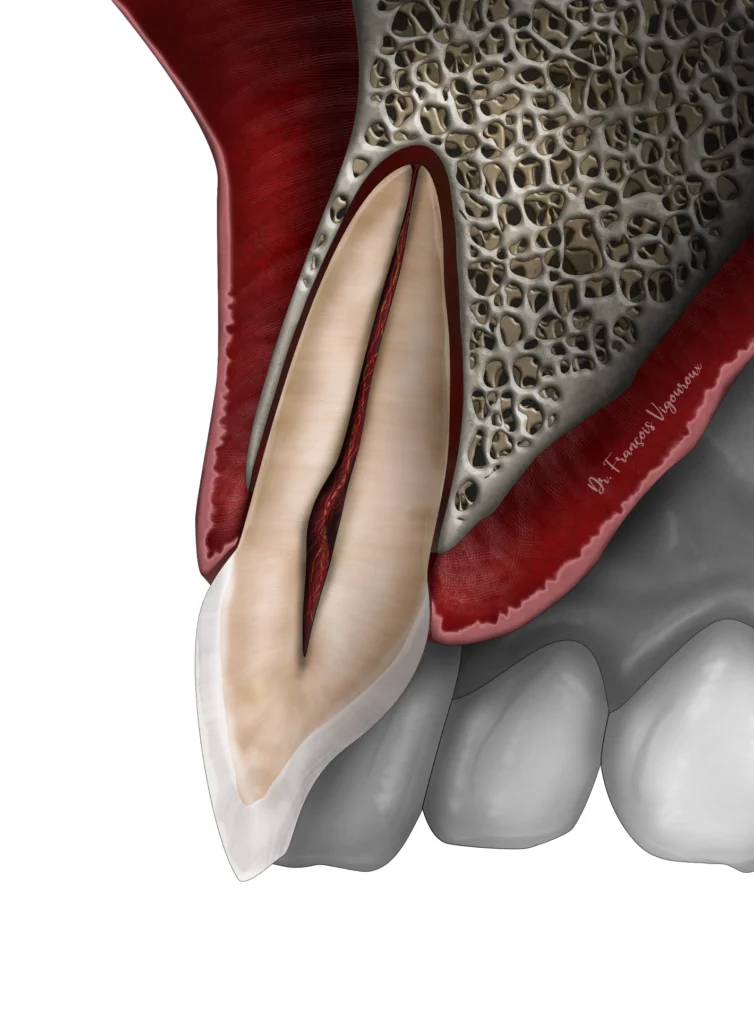
- Conclusion
The tooth is sensitive (pain on percussion) but remains in place.
After a follow-up retroalveolar X-ray and/or a CBCT scan, endodontic treatment is generally not necessary, but clinical and radiographic follow-up is recommended at 4 weeks and then at one year.
A soft diet is recommended during the first week following the injury.
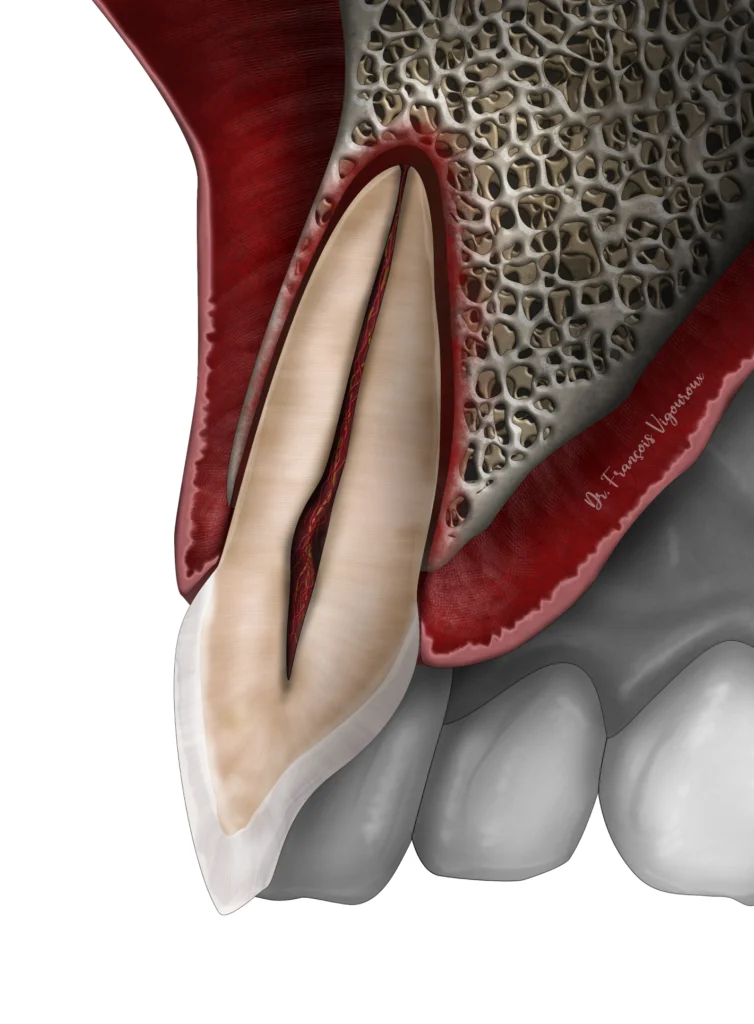
- Subluxation
The tooth is not displaced; it is sensitive (pain on percussion) and the gingival sulcus is bleeding.
After a follow-up retroalveolar X-ray and/or a CBCT (3D X-ray), endodontic treatment is generally not necessary, but clinical and radiographic follow-up is recommended.
A soft diet is recommended during the first week following the injury.
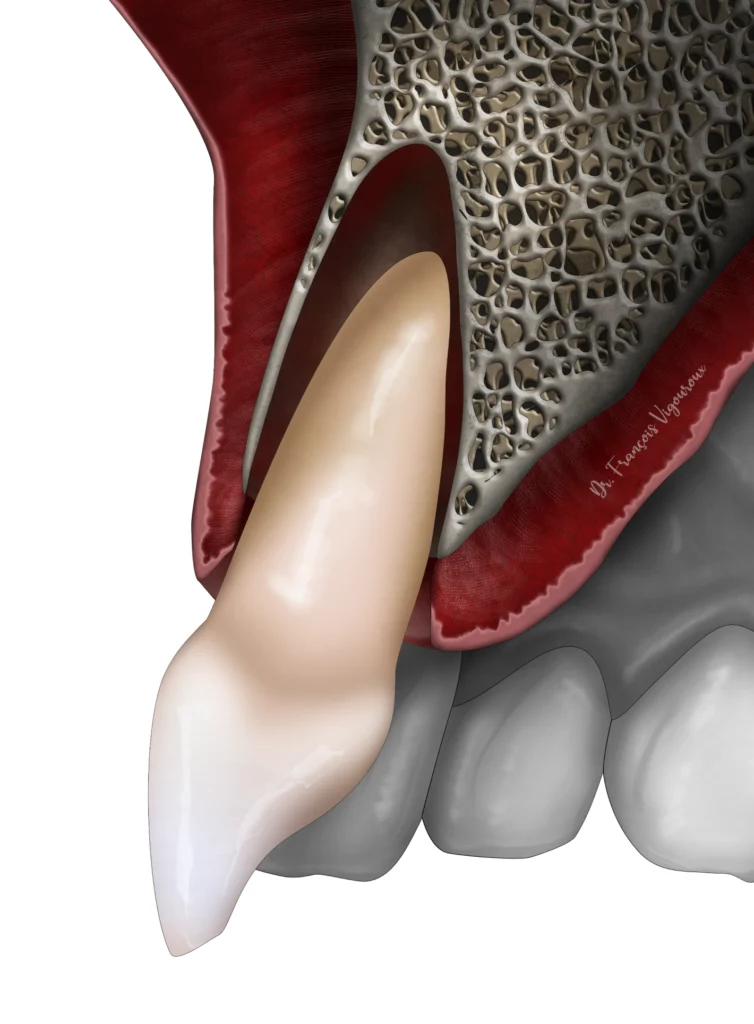
- Extrusion
The tooth is partially displaced from its socket due to a partial or complete tear of the alveolar ligament.
The tooth may appear shorter or longer depending on the degree of protrusion or retrusion.
The tooth is very loose and sensitive (pain on percussion).
After X-rays and a CBCT (3D X-ray), your endodontist will need to perform a procedure to save the tooth.
Clinical and radiographic follow-up is recommended. The schedule of follow-up visits is determined during the initial consultation based on the type of injury, its complexity, and the necessary care.
A soft diet is recommended for one week, along with good oral hygiene.
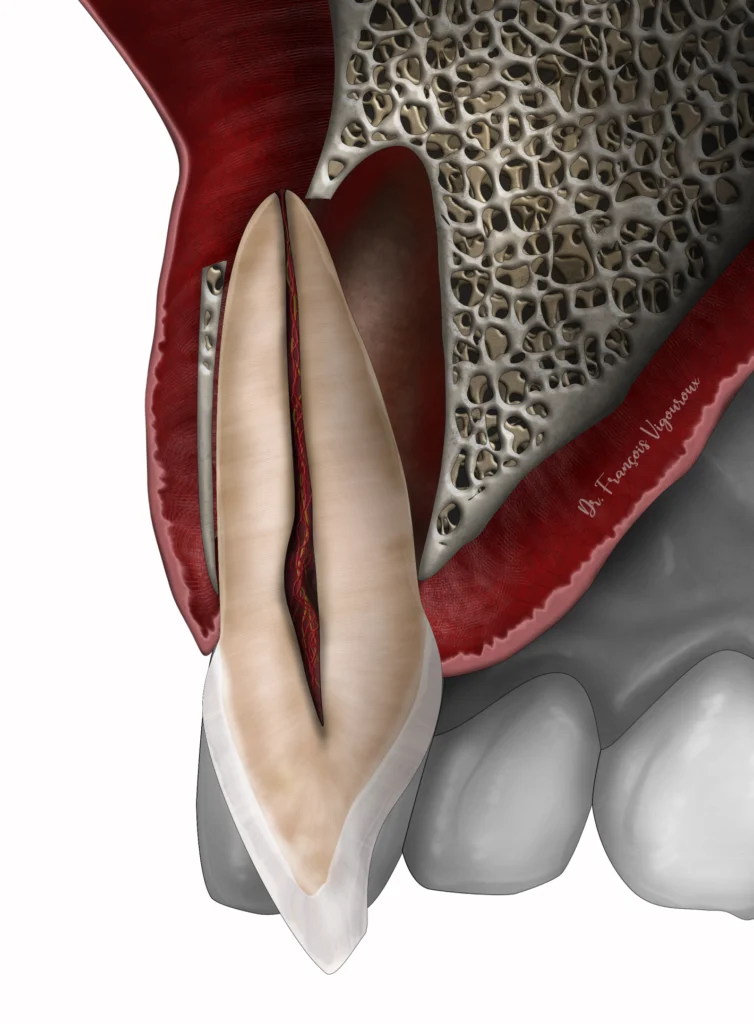
- Lateral dislocation
The tooth is completely displaced, usually toward the labial or palatal/lingual side; it is generally immobile and has little sensitivity.
After X-rays and a CBCT (3D X-ray), your endodontist will need to perform a procedure to save the tooth.
Clinical and radiographic follow-up is recommended. The schedule of follow-up visits is determined during the initial consultation based on the type of injury, its complexity, and the necessary care.
A soft diet is recommended for one week, along with good oral hygiene.
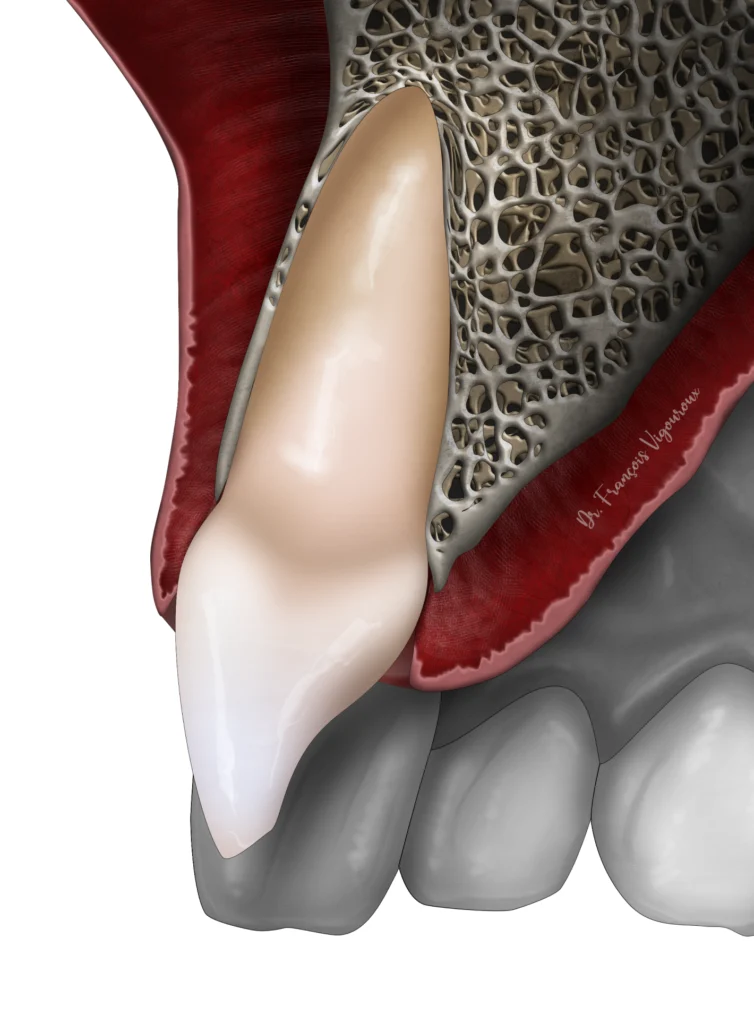
- Intrusion
Intrusion
After X-rays and a CBCT (3D X-ray), your endodontist will need to perform a procedure to save the tooth.
Clinical and radiographic follow-up is recommended. The schedule of follow-up visits is determined during the initial consultation based on the type of injury, its complexity, and the necessary care.
A soft diet is recommended for one week, along with good oral hygiene.
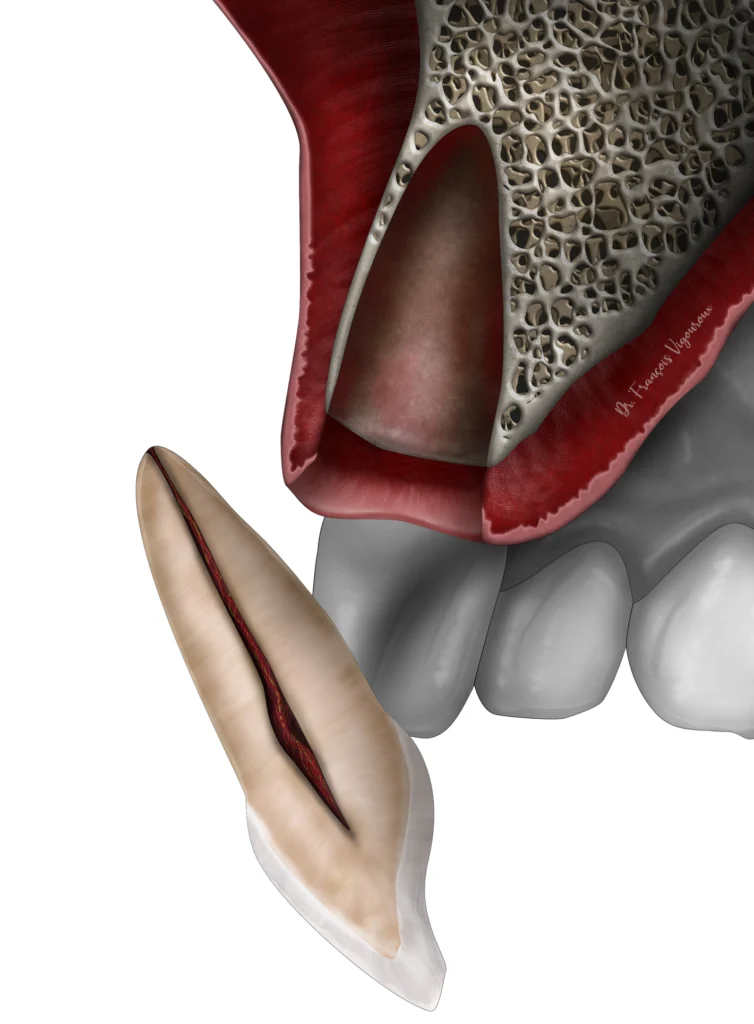
- Avulsion
The tooth has been completely dislodged from its socket; it has been knocked out. It is strongly recommended that you store your tooth in an appropriate medium while waiting for your emergency dental appointment. Every minute counts! The best storage media, in order, are: HBSS (balanced solution for organ transport), cold pasteurized milk, and saliva. Water is not a suitable storage medium.
After X-rays and a CBCT (3D X-ray), your endodontist must intervene immediately to save the tooth.
Clinical and radiographic follow-up is recommended. The schedule of follow-up visits is determined during the initial consultation based on the type of injury, its complexity, and the necessary care.
A soft diet is recommended for one week, along with good oral hygiene.
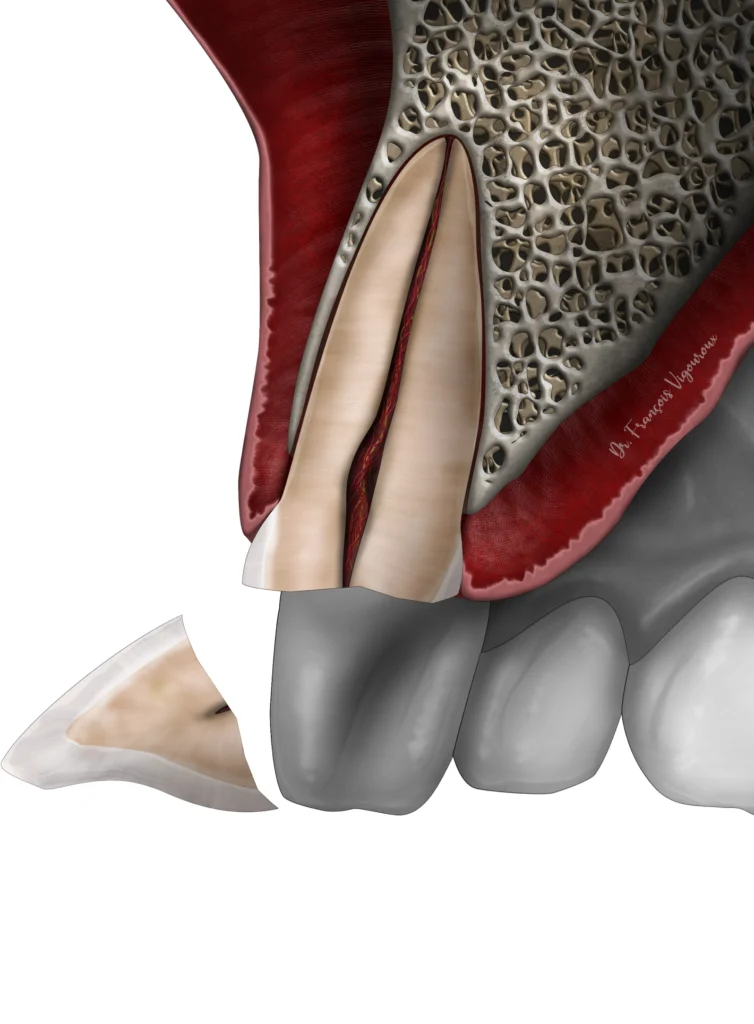
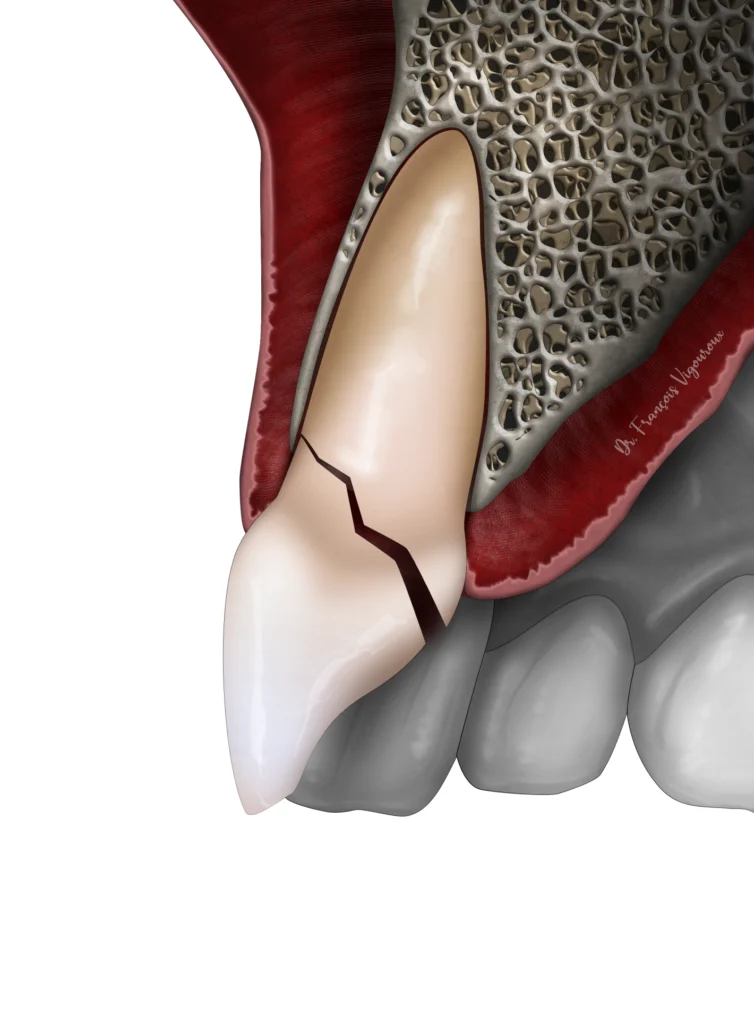
- Fractures
Fractures can affect the alveolus, enamel, dentin, or pulp. They require treatment tailored to the specific tissue or tissues involved.
It is recommended that you look for the broken pieces and store them in an appropriate medium until you can see a dentist on an emergency basis. You can store the pieces in pasteurized milk or saline solution.
After X-rays and a CBCT (3D X-ray), your endodontist may need to perform a procedure to save the tooth.
Clinical and radiographic follow-up is recommended. The schedule of follow-up visits is determined during the initial consultation based on the type of injury, its complexity, and the necessary care.
A soft diet is recommended for one week, along with good oral hygiene.
Regardless of its nature, any dental trauma requires an emergency consultation with a dentist or endodontist, who will determine the appropriate treatment.
Our other areas of expertise are:
Patient care pathway
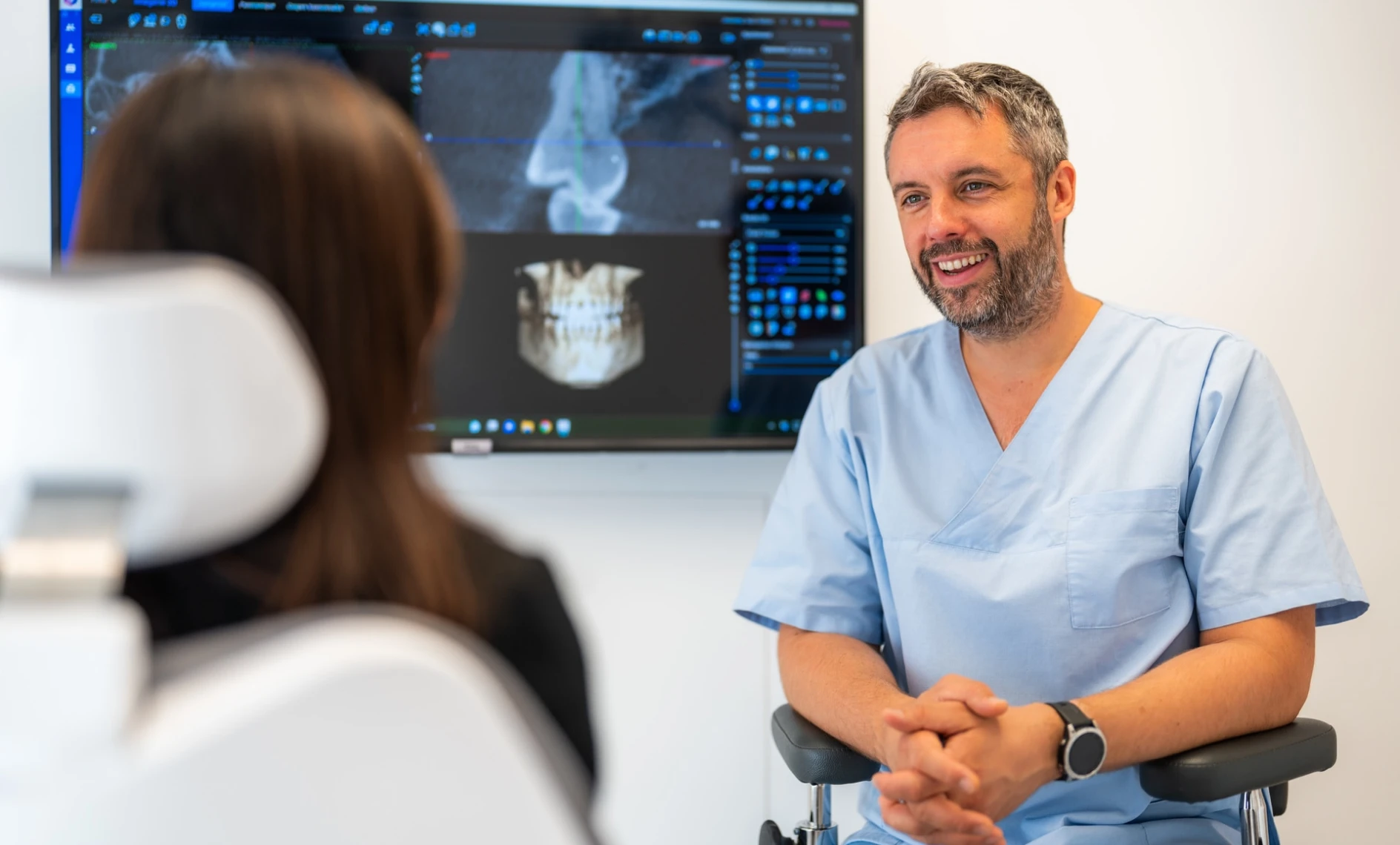
Patient care pathway
The schedule of follow-up visits for dental trauma is determined during the initial consultation based on the type of trauma, its complexity, and the necessary treatment.